


Onscreen text:
[RUKOBIA logo]
A CLOSER LOOK AT IDENTIFYING APPROPRIATE MDR HIV-1 PATIENTS
MDR HIV-1=multidrug-resistant human immunodeficiency virus type-1.
[Music]
Onscreen text:
A CLOSER LOOK AT IDENTIFYING APPROPRIATE MDR HIV-1 PATIENTS
Lower third graphic:
Dr. Charlotte-Paige Rolle
Internist, Infectious Disease Specialist
Orlando Immunology Center, Orlando, FL
Footnote at bottom of screen:
MDR HIV-1=multidrug-resistant human immunodeficiency virus type-1.
Dr. Rolle was a paid consultant for ViiV Healthcare at the time of filming.
[RUKOBIA logo]
DR. ROLLE: Hi, I’m Dr. Charlotte-Paige Rolle, an Infectious Disease Physician, board certified in Internal Medicine and Infectious Disease. In this video, we’re going to take a look at identifying appropriate patients for RUKOBIA.
Onscreen text:
- Indication and Important Safety Information for RUKOBIA
- My background and practice
- Overview of BRIGHTE
- How I identify patients for RUKOBIA
- My experience treating patients living with multidrug-resistant HIV-1 with RUKOBIA
HIV-1=human immunodeficiency virus type-1.
[RUKOBIA logo]
DR. ROLLE: First, we'll review the Indication and some of the Important Safety Information for RUKOBIA, then I'll share a bit about my background and practice, followed by an overview of the BRIGHTE study patient population. Lastly, I’ll answer some key questions about how I identify patients for RUKOBIA and about my experience treating patients living with multidrug-resistant HIV-1 with RUKOBIA.
Onscreen text: Video will continue in: :40 (countdown to end of scene)
INDICATION
RUKOBIA, in combination with other antiretrovirals (ARVs), is indicated to treat HIV-1 infection in heavily treatment-experienced adults with multidrug-resistant HIV-1 infection failing their current ARV regimen due to resistance, intolerance, or safety considerations.
IMPORTANT SAFETY INFORMATION
Contraindications
- Do not use in patients with previous hypersensitivity to fostemsavir or any of the components of RUKOBIA.
- Do not use RUKOBIA in patients receiving strong cytochrome P450 (CYP)3A inducers, including but not limited to enzalutamide, carbamazepine, phenytoin, rifampin, mitotane, and St John’s wort (Hypericum perforatum).
Please see additional Important Safety Information for RUKOBIA at the end of the video. Please click the link on this page to view the full Prescribing Information for RUKOBIA.
[RUKOBIA logo]
NARRATOR:
Indication
RUKOBIA, used with other HIV-1 medicines, is indicated for heavily treatment-experienced adults with multidrug-resistant HIV-1 who are failing their current ARV regimen.
IMPORTANT SAFETY INFORMATION
Contraindications Do not use in patients with previous hypersensitivity to fostemsavir or any of the components of RUKOBIA.
Do not use RUKOBIA in patients receiving strong cytochrome P450 (CYP)3A inducers, including those listed here.
Please see additional Important Safety Information for RUKOBIA at the end of the video. Please click on the link on this page to view the full Prescribing Information for RUKOBIA.
Onscreen text:
- Trained at Brigham and Women’s Hospital
- Infectious disease fellowship at Emory University
- Primary or sub-investigator in over 100 clinical trials
- Director of Research Operations, Orlando Immunology Center
- Main site preceptor, University of Central Florida’s College of Medicine Focused Inquiry and Research Experience program
- Time split roughly 70/30 between research and clinic
[RUKOBIA logo]
DR. ROLLE: So now, a little bit more about my background.
I trained at Brigham and Women’s Hospital and did an infectious disease fellowship at Emory University. I’ve been a primary or sub-investigator in over 100 clinical trials.
Currently, I’m the Director of Research Operations at the Orlando Immunology Center, where I oversee the institution’s investigator-sponsored research program. I’m also the main site preceptor for the University of Central Florida’s College of Medicine Focused Inquiry and Research Experience program. My time is split roughly 70/30 between research and clinic.
Onscreen text:
Orlando Immunology Center
- Founded in 1999
- Cares for ~5,000 people living with HIV-1
Population in my practice
~40% White
~30% Hispanic-Latinx
~25% African American-Black
~25% cisgender women
Large long-term, heavily treatment-experienced population
[RUKOBIA logo]
DR. ROLLE: The Orlando Immunology Center was founded in 1999 and takes care of approximately 5,000 people living with HIV. The population in my practice is roughly 40% White, 30% Hispanic-Latinx, 25% African American-Black, and 25% cisgender women.
About 40% of the people living with HIV are 50 years or older, so within that range of life experience, we have a large long-term, heavily treatment-experienced population. Many of our patients have been living with HIV since the late 1980s.
[Dr. Rolle On-screen]
DR. ROLLE: Because I’m one of 3 board-certified infectious disease physicians in our practice, many patients with complex HIV cases are sent to me, and I love taking care of this group. There is nothing more satisfying than helping a patient who’s previously been viremic for a long time due to a multitude of factors.
This is the situation in which I often find myself considering RUKOBIA.
Onscreen text:
Heavily treatment-experienced population
- Multidrug resistance
- Struggling to achieve or maintain viral suppression due to ARV resistance, Drug interactions, Challenging comorbidities
ARV=antiretroviral.
[RUKOBIA logo]
DR. ROLLE: I most frequently use this drug in our long-term, heavily treatment-experienced population. These patients have multidrug resistance and are struggling to achieve or maintain viral suppression due to antiretroviral resistance, drug interactions, or challenging comorbidities.
Onscreen text:
[RUKOBIA logo]
IDENTIFYING MDR HIV-1 PATIENTS
Onscreen text:
WHAT PERCENTAGE OF PATIENTS WITH HIV-1 IN THE US ARE MULTIDRUG-RESISTANT?
[RUKOBIA logo]
DR. ROLLE: So, what percentage of patients with HIV in the US are multidrug-resistant?
Onscreen text:
~29% of patients with HIV-1 in the US have been found to experience resistance to 2 or more classes of ARV therapy1
[RUKOBIA logo]
DR. ROLLE: Research has shown that approximately 29% of patients with HIV-1 in the US experience resistance to 2 or more classes of antiretroviral therapy. You may have patients like this in your practice. While not all these patients are appropriate for RUKOBIA, those who are no longer successful on their current regimen with multidrug resistance may be.
Onscreen text:
[RUKOBIA logo]
WHO IS APPROPRIATE FOR RUKOBIA?
[Music]
Onscreen text:
INDICATION
RUKOBIA, in combination with other antiretrovirals (ARVs), is indicated to treat HIV-1 infection in heavily treatment-experienced adults with multidrug-resistant HIV-1 infection failing their current ARV regimen due to resistance, intolerance, or safety considerations.
[RUKOBIA logo]
DR. ROLLE: When considering appropriate patients for RUKOBIA, we should start with the Indication.
Here we can see that we’re looking at heavily treatment-experienced adults with multidrug-resistant HIV-1 infection.
Importantly, they’re failing their current antiretroviral regimen due to any of 3 clinical factors: resistance; intolerance; or other safety considerations.
Onscreen text:
- Resistance
- Intolerance: Side effects of current regimen
- Safety considerations: Drug interactions, Managing multiple comorbidities
[RUKOBIA logo]
DR. ROLLE: Resistance is clear. Intolerance, as you would expect, can include issues with side effects of the current regimen. Safety considerations may involve drug interactions or the need to manage multiple comorbidities.
Onscreen text:
Questions when evaluating patient’s current regimen
- Is drug resistance limiting efficacy?
- Is the treatment regimen unsuccessful due to tolerability issues?
- Are drug interactions or new or existing comorbidities causing safety concerns?
[RUKOBIA logo]
DR. ROLLE: When patients are no longer successful on their current regimen, naturally, you’ll re-evaluate it, and the following broad questions can be helpful.
Is drug resistance limiting efficacy? Is the treatment regimen unsuccessful due to tolerability issues? Are drug interactions or new or existing comorbidities causing safety concerns?
If the patient is heavily treatment-experienced with MDR HIV-1 failing their current antiretroviral regimen, and the answer to any of these questions is “yes,” you may want to consider RUKOBIA as part of the patient’s optimized antiretroviral regimen.
Onscreen text:
[RUKOBIA logo]
BRIGHTE TRIAL
[Music]
Onscreen text:
WHO WERE THE PARTICIPANTS IN THE BRIGHTE TRIAL?
[RUKOBIA logo]
DR. ROLLE: Let’s take a closer look at the participants in BRIGHTE, the largest trial of RUKOBIA in people living with MDR HIV-1.
This was a representative population of people who are appropriate candidates for RUKOBIA.
Onscreen text:
BRIGHTE
Total participants2:
371 individuals living with MDR HIV-1
Randomized Cohort (n=272)3
1 or 2 ARV classes remaining with ≥1 fully active agent per class
[RUKOBIA logo]
DR. ROLLE: In BRIGHTE, 371 participants were enrolled in one of two cohorts. 272 participants were enrolled in the randomized cohort. These participants had at least one, but no more than two, fully active antiretrovirals available at baseline. They were randomized to receive either fostemsavir or placebo, both added to their failing regimen, for 8 days.
Onscreen text:
BRIGHTE
Nonrandomized Cohort (n=99)3
0 fully active and approved agents remaining
[RUKOBIA logo]
DR. ROLLE: 99 participants had no fully active antiretrovirals and entered the nonrandomized cohort. These individuals began open-label fostemsavir combined with an optimized background regimen on Day 1.
Onscreen text:
BRIGHTE trial design2
Randomized Cohort (n=272)2
1 or 2 ARV classes remaining with ≥1 fully active agent per class
Blinded RUKOBIA 600 mg BID + failing regimen (n=203*)
Blinded placebo + failing regimen (n=69)
Open-label RUKOBIA 600 mg BID + OBT†
[Timeline of days and weeks noting days 01, 08, 09; and weeks 24, 48, 96, 192, and 240]
Nonrandomized Cohort (n=99)2
0 fully active and approved ARV agents remaining
Open-label RUKOBIA 600 mg BID + OBT†
Factors influencing participant numbers and data availability3,4
- COVID-19 from December 2019
- US approval of RUKOBIA, July 2020
- RUKOBIA available in Germany, March 2021
All participants in BRIGHTE were living with MDR HIV-1 and failing their current ARV regimens with a viral load of ≥400 copies/mL at enrollment.1
BID=twice daily; OBT=optimized background therapy; RNA=ribonucleic acid.
*Two participants in the RUKOBIA + failing regimen arm who had missing Day 1 HIV-1 RNA values were not included in the analysis at Day 8.
†Investigator-selected OBT (based on resistance testing and treatment history).2
[RUKOBIA logo]
DR. ROLLE: After Day 8, all participants in the randomized cohort switched to open-label fostemsavir plus an optimized background therapy tailored to their resistance profiles.
Onscreen text:
BRIGHTE
Overall population5
- Broad range of people living with MDR HIV-1
- Age range: 18 to 73
[RUKOBIA logo]
DR. ROLLE: Consider some of the median entry or baseline characteristics of the broad range of people living with multidrug-resistant HIV-1 who participated in BRIGHTE.
They ranged in age from 18 to 73.
Onscreen text:
BRIGHTE
Randomized cohort: baseline characteristics2,5
Median age (years); HIV-1 RNA (range), median log10 copies/mL; CD4+ T-cell count (range), median cells/mm3
18-48-73; 1.6-4.7-6.9; 0-99.5-1160
74% of overall participants were Male
68% of overall participants were White
22% of overall participants were Black/African American
10% of overall participants were Other Races
29% of the total population was Hispanic2*
*Patients in the Hispanic ethnic group could also be included in a racial group.2
[RUKOBIA logo]
DR. ROLLE: In the randomized cohort, the median age was 48, and the median entry or baseline HIV-1 RNA level was 4.7 log. The median CD4 count was 99.5 cells.
Onscreen text:
BRIGHTE
Nonrandomized cohort: baseline characteristics2,5
Median age (years); HIV-1 RNA (range), median log10 copies/mL; CD4+ T-cell count (range), median cells/mm3
17*-50-72; 1.6-4.3-6.6; 0-41-641
90% of overall participants were Male
74% of overall participants were White
23% of overall participants were Black/African American
3% of overall participants were Other Races
28% of the total population was Hispanic2†
*One patient was 17 years of age at enrollment and was classified as a protocol deviation.
†Patients in the Hispanic ethnic group could also be included in a racial group.2
[RUKOBIA logo]
DR. ROLLE: In the nonrandomized cohort, the median age was 50, and the median entry or baseline HIV-1 RNA level was 4.3 log. At 41, the median CD4 count was much lower than that of the randomized cohort.
Onscreen text:
Most common optimized background ARVs in BRIGHTE6
- Dolutegravir
- Darunavir
- Tenofovir
[RUKOBIA logo]
DR. ROLLE: Patients in BRIGHTE were receiving RUKOBIA in combination with other antiretrovirals to optimize the antiretroviral regimen.
The most common antiretrovirals included in the background therapy were dolutegravir, darunavir, and tenofovir.
Onscreen text:
BRIGHTE primary endpoint
Adjusted mean decline in HIV-1 RNA at Day 8 (randomized cohort):
- 0.79 log10 copies/mL (RUKOBIA 600 mg BID + failing regimen, n=201) vs 0.17 log10 copies/mL (placebo + failing regimen, n=69)
Difference: -0.625
(95% CI: -0.810, -0.441); P<0.0001
[RUKOBIA logo]
DR. ROLLE: The primary endpoint in BRIGHTE was the adjusted mean decline in HIV-1 RNA from Day 1 to Day 8 with RUKOBIA versus placebo in the randomized cohort.
The adjusted mean decline was 0.79 log with RUKOBIA twice daily plus failing regimen versus 0.17 log with placebo plus failing regimen.
The difference of -0.625 was statistically significant.
Onscreen text:
Virologic outcomes
Virologically suppressed (HIV-1 RNA <40 copies/mL) patients in the ITT–E*
Snapshot Analysis (randomized cohort):
- 53% of patients at Week 24 (n=272)
- 60% of patients at Week 96 (n=272)
- 45% of patients at Week 240 (n=267)†
Results are descriptive.
Additional Important Safety Information for RUKOBIA will be presented later in this video. Please see link on this webpage for full Prescribing Information for RUKOBIA.
*The ITT-E population included all randomized participants who received at least 1 dose of treatment. The FDA Snapshot Algorithm was used to evaluate rates of virologic suppression among all ITT-E patients. In the ITT-E population, missing data or change in OBT was counted as virologic failure.
†At week 240, 7 participants in the randomized cohort had completed the study by transitioning to locally approved fostemsavir.
[RUKOBIA logo]
DR. ROLLE: Looking at virologic outcomes in the ITT–E Snapshot Analysis, 53% of patients were virologically suppressed at Week 24 and 60% of patients were suppressed at Week 96.
Here, virologic suppression was defined as an HIV-1 RNA less than 40 copies. The results are descriptive in nature.
Onscreen text:
Opportunities to optimize ARV regimens if they’re no longer working in your patients with MDR HIV-1
[RUKOBIA logo]
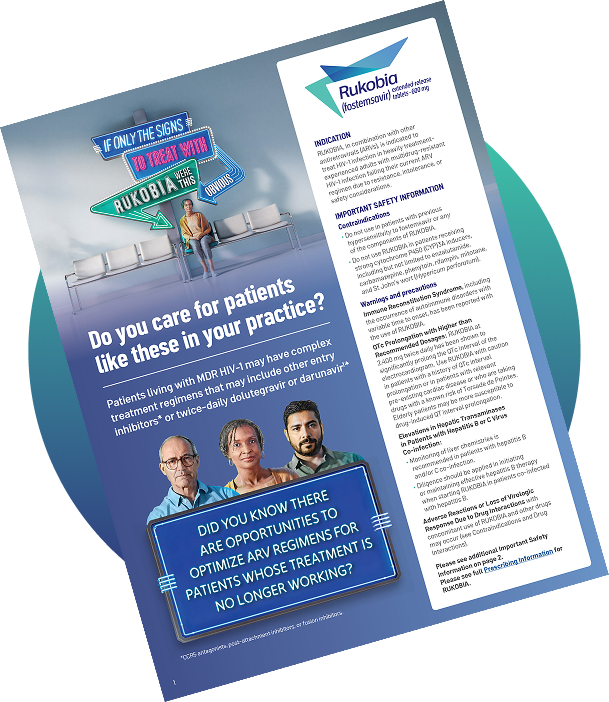
DR. ROLLE: You may see patients with complex regimens that include entry inhibitors or twice-daily dolutegravir or darunavir.
If these regimens are no longer working for your patients with MDR HIV-1, there may be an opportunity to optimize these antiretroviral regimens.
Onscreen text:
Patients living with
- Multidrug-resistant HIV-1
- Who are failing their current ARV due to resistance, intolerance, or other safety considerations
[RUKOBIA logo]
DR. ROLLE: So, to summarize this section of the video: the Indication of RUKOBIA and the BRIGHTE study present us with heavily treatment-experienced adult patients living with multidrug-resistant HIV-1 who are failing their current antiretroviral therapy.
You may have patients like this in your practice who are struggling to maintain viral suppression due to resistance, intolerance, or other safety considerations.
Next, I’d like to pivot slightly and answer some questions about my experience identifying appropriate patients for RUKOBIA.
Onscreen text: [RUKOBIA logo]
IDENTIFYING RUKOBIA PATIENTS
[Music]
Onscreen text:
HOW DO YOU IDENTIFY APPROPRIATE PATIENTS FOR RUKOBIA?
[RUKOBIA logo]
DR. ROLLE: According to the Indication, RUKOBIA may be appropriate for individuals with MDR HIV-1 who are unsuccessful at maintaining viral suppression due to a number of clinical factors.
Onscreen text:
If viremia is due to multidrug resistance, RUKOBIA may be an option.7
[RUKOBIA logo]
DR. ROLLE: For instance, when I encounter persistent viremia in a patient, I will ask myself whether the incorporation of RUKOBIA might be right for the patient in front of me.
Onscreen text:
If regimens are failing due to safety concerns such as drug interactions or issues with other health conditions, I consider RUKOBIA.
[RUKOBIA logo]
DR. ROLLE: However, other scenarios may be more subtle. Comorbidities and drug interactions are a major consideration in the aging population, and sometimes I will even consider RUKOBIA in a patient with MDR HIV-1 failing treatment and on an antiretroviral that is causing a safety concern with other drugs or health conditions.
Onscreen text:
[RUKOBIA logo]
HOW DO YOU KNOW WHEN A PATIENT IS FAILING THEIR REGIMEN?
[Music]
Onscreen text:
Causes of failure may include:
- Resistance
- Intolerance (side effects)
- Safety considerations (drug interactions)
[RUKOBIA logo]
DR. ROLLE: The presence of persistent viremia is the most obvious sign of virologic failure. People with detectable, ongoing viremia for whom constructing a fully suppressive regimen has been a challenge may be candidates for the gp120-directed attachment inhibitor.
Onscreen text:
When viral loads are elevated, consider:
- Repeating the viral load test
- Investigating for causes of viremia
[RUKOBIA logo]
DR. ROLLE: You will only know whether a viral load is a blip or the first sign of virologic failure if you repeat it. That is why all elevated viral load tests should be repeated and investigated. Are they having any drug interactions leading to failure? Are there any tolerability or safety concerns contributing to failure?
Onscreen text:
[RUKOBIA logo]
HOW DO YOU ADDRESS PATIENTS STRUGGLING WITH RESISTANCE, INTOLERANCE, OR SAFETY ISSUES?
[Music]
Onscreen text:
Prompted to consider RUKOBIA for MDR HIV-1 when
- Patients fail ARV regimens due to tolerability, e.g., gastrointestinal concerns
- Failing ARV regimen and treatment options are limited
[RUKOBIA logo]
DR. ROLLE: In patients who have been on treatment for a long time and present with viremia due to adverse events or tolerability issues, I consider RUKOBIA, as often their other treatment options are limited.
Onscreen text: PERFORM MEDICATION RECONCILIATION, INCLUDING OVER-THE-COUNTER DRUGS AND SUPPLEMENTS
[RUKOBIA logo]
DR. ROLLE: I am also very diligent with medication reconciliation, including the use of nonprescription drugs and over-the-counter supplements. Our aging patients are often on so many drugs with so many different providers, it can be overwhelming for them to tell us when new drugs are added.
So, it is our responsibility to make sure we ask. And in these instances, I have caught several drug interactions that required careful consideration.
Onscreen text:
[RUKOBIA logo]
DR. ROLLE’S EXPERIENCE
[Music]
Onscreen text:
WHAT PATIENT-SPECIFIC FACTORS DO YOU CONSIDER BEFORE PRESCRIBING RUKOBIA?
[RUKOBIA logo]
DR. ROLLE: Once you identify RUKOBIA may be an appropriate treatment, some factors to consider are drug interactions and adherence.
RUKOBIA is the first and only attachment inhibitor that offers a novel mechanism of action that patients may need. As I consult with my patients on adherence strategies, it's important to build an optimized routine.
Onscreen text:
Common patient-specific factors when adding RUKOBIA
- Adherence
- Drug interactions with other ARVs6
[RUKOBIA logo]
DR. ROLLE: A significant concern providers have with any antiretroviral regimen is adherence, particularly with a twice-daily regimen. But some patients living with MDR HIV-1 are already on twice-daily antiretrovirals. In BRIGHTE, for instance, 84% of patients in the randomized cohort were on dolutegravir with 75% of that population on a twice-daily regimen.
I discuss adherence barriers with my patients, and I will often encourage them to identify other activities or drugs they might be taking twice daily and pair RUKOBIA with that.
Onscreen text:
[RUKOBIA logo]
HOW DO YOU COUNSEL PATIENTS ABOUT THE POTENTIAL RISKS AND BENEFITS OF RUKOBIA?
[Music]
Onscreen text:
Ensure that patients
- Know why RUKOBIA is being used
- Understand proper adherence
- Understand potential side effects of RUKOBIA
[RUKOBIA logo]
DR. ROLLE: Overall, I make sure that patients know RUKOBIA is being utilized to help them reach their HIV therapeutic goals of achieving and maintaining viral suppression. In order for the regimen to be successful, patients have to be counselled on adherence as well as the potential side effects of RUKOBIA and their OBT.
Onscreen text:
I remind my patients starting RUKOBIA to tell me about any new
- Side effects
- Drugs added to their regimen
- Symptoms from existing conditions
[RUKOBIA logo]
DR. ROLLE: I always remind patients to tell me about any new side effect that occurs after starting the drug, and to communicate with me any time they have new drugs added to their regimen.
I also talk to patients with advanced disease at baseline about monitoring their health, particularly if they have other conditions—and I ask them to let me know if they experience any new symptoms when they start RUKOBIA.
Onscreen text:
[RUKOBIA logo]
HOW DO YOU INCORPORATE RUKOBIA INTO A PATIENT’S REGIMEN?
[Music]
Incorporating RUKOBIA
1) Decide RUKOBIA is the appropriate choice
2) Ensure RUKOBIA is accompanied by the right optimized background therapy before initiating
[RUKOBIA logo]
DR. ROLLE: Once you decide RUKOBIA is right for a patient, before you initiate it, you must ensure it’s being given with the right OBT. Sometimes this may require you to reconsider other components of the patient’s regimen to optimize the chances of virologic success. This requires a thorough review of the cumulative resistance tests and prior treatment history.
Hopefully you found this information useful, and you can now incorporate it into your clinical practice.
Onscreen text:
Please continue watching for Important Safety Information on RUKOBIA.
Please use the link on this webpage to view the full Prescribing Information for RUKOBIA.
[RUKOBIA logo]
DR. ROLLE: Please continue watching for Important Safety Information on RUKOBIA. Please use the link on this webpage to view the full Prescribing Information for RUKOBIA.
Onscreen text:
[RUKOBIA logo]
IMPORTANT SAFETY INFORMATION CONT'D
NARRATOR:
Important safety information, continued.
Onscreen text:
IMPORTANT SAFETY INFORMATION (Continued)
Warnings and precautions
Immune Reconstitution Syndrome, including the occurrence of autoimmune disorders with variable time to onset, has been reported with the use of RUKOBIA.
QTc Prolongation with Higher than Recommended Dosages: RUKOBIA at 2,400 mg twice daily has been shown to significantly prolong the QTc interval of the electrocardiogram. Use RUKOBIA with caution in patients with a history of QTc interval prolongation or in patients with relevant pre-existing cardiac disease or who are taking drugs with a known risk of Torsade de Pointes. Elderly patients may be more susceptible to drug-induced QT interval prolongation.
Elevations in Hepatic Transaminases in Patients with Hepatitis B or C Virus Co-infection:
- Monitoring of liver chemistries is recommended in patients with hepatitis B and/or C co-infection.
- Diligence should be applied in initiating or maintaining effective hepatitis B therapy when starting RUKOBIA in patients co-infected with hepatitis B.
Adverse Reactions or Loss of Virologic Response Due to Drug Interactions with concomitant use of RUKOBIA and other drugs may occur (see Contraindications and Drug Interactions).
[RUKOBIA logo]
NARRATOR:
Warnings and precautions
Immune Reconstitution Syndrome and autoimmune disorders have been reported with the use of RUKOBIA.
QTc prolongation has occurred with higher than recommended dosages of RUKOBIA. Use RUKOBIA with caution in patients with a history of QTc interval prolongation or cardiac disease, or who are taking drugs with a known risk of Torsade de Pointes. Elderly patients may be more susceptible.
Monitoring of liver chemistries is recommended in patients with hepatitis B and/or C co-infection. Diligence should be applied when starting RUKOBIA in patients receiving hepatitis B therapy.
Adverse reactions or loss of virologic response due to drug interactions may occur when using RUKOBIA with other drugs.
Onscreen text:
IMPORTANT SAFETY INFORMATION (Continued)
Adverse reactions
- The most common adverse reaction (all grades, randomized cohort) observed in ≥5% of subjects was nausea (10%).
- 81% of adverse reactions reported with RUKOBIA were mild or moderate in severity.
Drug interactions
- See the full Prescribing Information for RUKOBIA for a complete list of significant drug interactions.
- Temsavir may increase plasma concentrations of grazoprevir and voxilaprevir. Use an alternative hepatitis C virus regimen if possible.
- Use the lowest possible starting dose for statins and monitor for statin-associated adverse events.
- Patients receiving RUKOBIA should not take doses of estrogen-based therapies, including oral contraceptives, that contain more than 30 mcg/day of ethinyl estradiol. Caution is advised particularly in patients with additional risk factors for thromboembolic events.
[RUKOBIA logo]
NARRATOR:
Adverse reactions
The most common adverse reaction reported with RUKOBIA was nausea.
Drug interactions
See the full Prescribing Information for RUKOBIA for all significant drug interactions.
Temsavir may increase plasma concentrations of grazoprevir and voxilaprevir. Use an alternative hepatitis C virus regimen, if possible.
Use the lowest possible starting dose for statins with careful monitoring.
Patients receiving RUKOBIA should not take estrogen-based therapies that contain more than 30 mcg/day of ethinyl estradiol. Use RUKOBIA with caution in patients with additional risk factors for thromboembolic events.
Onscreen text:
IMPORTANT SAFETY INFORMATION (Continued)
Use in specific populations
- Pregnancy: There are insufficient human data on the use of RUKOBIA during pregnancy to definitively assess a drug-associated risk for birth defects and miscarriage. An Antiretroviral Pregnancy Registry has been established.
- Lactation: Potential risks of breastfeeding include HIV-1 transmission, developing viral resistance in HIV-positive infants, and adverse reactions in a breastfed infant.
To report suspected adverse reactions, contact ViiV Healthcare at gsk.public.reportum.com or 1-877-844-8272, or FDA at 1-888-FDA-1088 or www.fda.gov/medwatch.
Please see the accompanying full Prescribing Information or visit www.RUKOBIAHCP.com.
[RUKOBIA logo]
NARRATOR:
Use in specific populations
There are insufficient data on the use of RUKOBIA during pregnancy to assess drug-associated risks.
Potential risks of breastfeeding include HIV-1 transmission, developing viral resistance in HIV-positive infants, and adverse reactions in the infant.
To report suspected adverse reactions, contact ViiV Healthcare at gsk.public.reportum.com or 1-877-844-8272, or FDA at 1-888-FDA-1088 or www.fda.gov/medwatch.
Please see the accompanying full Prescribing Information or visit www.RUKOBIAHCP.com.
Onscreen text:
References:
- Henegar C, Underwood M, Ragone L, et al. Trends and characteristics of HIV-1 drug resistance in the United States (2012-2018). Presented at: Conference on Retroviruses and Opportunistic Infections; March 8-11, 2020; Boston, MA. Presentation 521.
- Kozal M, Aberg J, Pialoux G, et al. Fostemsavir in adults with multidrug-resistant HIV-1 infection. N Engl J Med. 2020;382(13):1232-1243. doi:10.1056/NEJMoa1902493
- Aberg JA, Shepherd B, Wang M, et al. Week 240 efficacy and safety of fostemsavir plus optimized background therapy in heavily treatment-experienced adults with HIV-1. Infect Dis Ther. 2023;12(9):2321-2335. doi:10.1007/s40121-023-00870-6
- Aberg J, Shepherd B, Wang M, et al. Efficacy and safety of fostemsavir plus optimized background therapy in heavily treatment-experienced adults with HIV-1: week 240 results of the phase 3 BRIGHTE study. Poster presented at: 24th International AIDS Conference; July 29-August 2, 2022; Montreal, Canada. Poster EPB160.
- Ackerman P, Thompson M, Molina JM, et al. Long-term efficacy and safety of fostemsavir among subgroups of heavily treatment-experienced adults with HIV-1. AIDS. 2021;35(7):1061-1072.
- Lataillade M, Lalezari JP, Kozal M, et al. Safety and efficacy of the HIV-1 attachment inhibitor prodrug fostemsavir in heavily treatment-experienced individuals: week 96 results of the phase 3 BRIGHTE study. Lancet HIV. 2020;7(11):e740-e751. doi:10.1016/S2352-3018(20)30240-X
- Pelchen-Matthews A, Borges AH, Reekie J, et al. Prevalence and outcomes for heavily treatment-experienced individuals living with human immunodeficiency virus in a European cohort. J Acquir Immune Defic Syndr. 2021;87(2):806-817.
[RUKOBIA logo]
[Music]
[ViiV Healthcare logo]
For US HCPs only.
Trademarks are property of their respective owners.
©2025 ViiV Healthcare or licensor.
PMUS-FSTVID250003 September 2025
Produced in USA.
Dr. Charlotte-Paige Rolle
Compensated by ViiV Healthcare.
Dr. Rolle talks about her experience treating patients living with MDR HIV-1 with RUKOBIA. In this video, Dr. Rolle discusses MDR HIV-1 and the BRIGHTE trial, explains how to identify a RUKOBIA patient, and shares her personal experience.
[Music]
[RUKOBIA logo]
Onscreen text:
A CLOSER LOOK
Onscreen text:
A CLOSER LOOK
Lower third graphic:
Dr. Douglas Cunningham
Family Practitioner, Phoenix, AZ
Dr. Cunningham was a paid consultant for ViiV Healthcare at the time of filming.
[RUKOBIA logo]
DR. CUNNINGHAM:
Hello, I’m Dr. Doug Cunningham, board-certified in Family Practice and by the American Academy of HIV Medicine.
In the chapters of this video, we’ll take a closer look at 4 key topics:
Onscreen text:
- The BRIGHTE trial of RUKOBIA
- The efficacy profile of RUKOBIA
- The unique mechanism of action of RUKOBIA, and
- The safety profile of RUKOBIA
[RUKOBIA logo]
DR. CUNNINGHAM:
- The BRIGHTE trial of RUKOBIA
- The efficacy profile of RUKOBIA
- The unique mechanism of action of RUKOBIA, and
- Safety profile of RUKOBIA
As we cover each topic, we’ll walk through the basics, and then I’ll share my professional perspective as it relates to the topic at hand. First, we'll review the Indication and some of the Important Safety Information for RUKOBIA. I'll share a bit about my background and practice, and then we'll move into discussing the content.
Onscreen text:
Video will continue in: :40 (countdown to end of scene)
INDICATION
RUKOBIA, in combination with other antiretrovirals (ARVs), is indicated to treat HIV-1 infection in heavily treatment-experienced adults with multidrug-resistant HIV-1 infection failing their current ARV regimen due to resistance, intolerance, or safety considerations.
IMPORTANT SAFETY INFORMATION
Contraindications
- Do not use in patients with previous hypersensitivity to fostemsavir or any of the components of RUKOBIA.
- Do not use RUKOBIA in patients receiving strong cytochrome P450 (CYP)3A inducers, including but not limited to enzalutamide, carbamazepine, phenytoin, rifampin, mitotane, and St John’s wort (Hypericum perforatum).
Please see additional Important Safety Information for RUKOBIA at the end of the video. Please click the link on this page to view the full Prescribing Information for RUKOBIA.
[RUKOBIA logo]
NARRATOR:
Indication
RUKOBIA, used with other HIV-1 medicines, is indicated for heavily treatment-experienced adults with multidrug-resistant HIV-1 who are failing their current ARV regimen.
IMPORTANT SAFETY INFORMATION
Contraindications
Do not use in patients with previous hypersensitivity to fostemsavir or any of the components of RUKOBIA.
Do not use RUKOBIA in patients receiving strong cytochrome P450 (CYP)3A inducers, including those listed here.
Please see additional Important Safety Information for RUKOBIA at the end of the video. Please click on the link on this page to view the full Prescribing Information for RUKOBIA.
Onscreen text:
Dr. Douglas Cunningham
Family Practitioner, Phoenix, AZ
- Practice primary healthcare with a focus on HIV/AIDS and HIV clinical research
- Lecture extensively on HIV
- Associate Professor, A.T. Still, Kirksville College of Osteopathic Medicine, Mesa, Arizona
- 35+ years providing care for patients with HIV and the LGBTQ community
- Many patients with multidrug resistance and additional considerations, such as substance abuse and homelessness
[RUKOBIA logo]
DR. CUNNINGHAM:
A little bit about my background.
I currently practice primary healthcare with a focus on HIV/AIDS and HIV clinical research. I also lecture extensively on HIV both nationally and internationally, and I’m an Associate Professor at the A.T. Still, Kirksville College of Osteopathic Medicine in Mesa, Arizona.
For the past 35 years I have been providing care targeted at the specific medical and emotional needs of patients with HIV and the LGBTQ community.
Because I’ve been treating patients since the beginning of the epidemic, I have many patients with multidrug resistance. We see many patients with additional considerations, such as substance abuse and homelessness, so I have extensive experience meeting the special needs of these vulnerable populations. We take care of them just like they are family and we consider RUKOBIA when treating people living with multidrug-resistant HIV-1
Onscreen text:
We consider RUKOBIA when treating people living with multidrug-resistant HIV-1
HIV-1=human immunodeficiency virus type-1.
DR. CUNNINGHAM: We take care of them just like they are family, and we consider RUKOBIA when treating people living with multidrug-resistant HIV-1.
Onscreen text: [RUKOBIA logo]
WHAT DOES A CLOSER LOOK AT THE BRIGHTE TRIAL SHOW US?
[Music]
What does a closer look at the BRIGHTE trial show us?
DR. CUNNINGHAM:
In this chapter, we’ll take a closer look at the BRIGHTE trial of RUKOBIA.
I’ll take you through some essential features of BRIGHTE, the largest clinical trial of RUKOBIA in people living with multidrug-resistant HIV-1.
After that, I’ll share my perspective on the relevance of the trial design and participants to real-world treatment scenarios in people with multidrug-resistant HIV-1 who are failing their current antiretroviral regimen due to resistance, intolerance, or safety considerations.
Onscreen text:
WHO WERE THE TRIAL PARTICIPANTS?
DR. CUNNINGHAM: So, who were the trial participants?
Onscreen text: BRIGHTE
Total participants1:
371 individuals living with MDR HIV-1
- Failing current ARV regimen with viral load ≥400 copies/mL
ARV=antiretroviral; MDR HIV-1=multidrug-resistant human immunodeficiency virus type-1.
DR. CUNNINGHAM: In BRIGHTE, all 371 participants were living with multidrug-resistant HIV-1 and failing their current antiretroviral regimens with a viral load greater than or equal to 400 copies at enrollment.
Onscreen text:
BRIGHTE
Randomized Cohort (n=272)1,2
1 or 2 ARV classes remaining with ≥1 fully active agent per class
Nonrandomized Cohort (n=99)1,2
0 fully active and approved ARV agents remaining
DR. CUNNINGHAM: The 272 individuals in the randomized cohort had 1 or 2 antiretroviral classes left. The 99 individuals in the nonrandomized cohort had zero fully active and approved antiretroviral agents remaining.
[Music]
Onscreen text:
WHAT WAS THE TRIAL DESIGN?
Onscreen text:
Randomized cohort1
[BRIGHTE study design]
Nonrandomized cohort1
BID=twice daily; OBT=optimized background therapy.
*Two participants in the RUKOBIA + failing regimen arm who had missing Day 1 HIV-1 RNA values were not included in the analysis at Day 8.
†Investigator-selected OBT (based on resistance testing and treatment history).1
DR. CUNNINGHAM: In the blinded phase, Days 1 through 8, participants in the randomized cohort received RUKOBIA 600 milligrams twice daily plus their failing regimen, or placebo plus their current failing regimen. In the following open-label phase, Day 9 through Week 240, they received RUKOBIA 600 milligrams twice daily plus optimized background therapy, or OBT. The OBT was investigator-selected based on resistance testing and treatment history.
Participants in the nonrandomized cohort received RUKOBIA 600 milligrams twice daily plus optimized background therapy from Day 1.
Onscreen text:
BRIGHTE
Randomized cohort: Baseline characteristics3
[Baseline characteristics, randomized cohort]
29% of the total population was Hispanic1*
RNA=ribonucleic acid.
*Patients in the Hispanic ethnic group could also be included in a racial group.1
DR. CUNNINGHAM: Let’s review some of the key characteristics of the broad range of people living with multidrug-resistant HIV-1 who participated in BRIGHTE.
Participants in the randomized cohort ranged in age from 18 to 73 with a median age of 48.
Onscreen text:
BRIGHTE
Nonrandomized cohort: Baseline characteristics1,3
[Baseline characteristics, randomized cohort]
28% of the total population was Hispanic1†
*One patient was 17 years of age at enrollment and was classified as a protocol deviation.1
†Patients in the Hispanic ethnic group could also be included in a racial group.1
DR. CUNNINGHAM: In the nonrandomized cohort, the median HIV-1 RNA level was 4.3 log. The median CD4 count was 41, which was much lower than that of the randomized cohort.
Participants in the nonrandomized cohort ranged in age from 17 to 72 with a median age of 50.
Onscreen text:
WHAT WERE THE TRIAL ENDPOINTS?
[Music]
Onscreen text:
Primary endpoint1
- Adjusted mean plasma HIV-1 RNA log10 change from Days 1 to 8 (randomized cohort)
Additional endpoints1,2
- Virologic suppression
- Change in CD4+ T-cell counts
- Additional endpoints were evaluated at Weeks 24, 48, 96, and 240
DR. CUNNINGHAM: The primary endpoint was adjusted mean plasma HIV-1 RNA log10 change from Days 1 to 8 in the randomized cohort.
Additional endpoints included virologic suppression and change in CD4 counts.
[Music]
Onscreen text:
WHY IS BRIGHTE IMPORTANT?
Onscreen text:
The BRIGHTE trial1
The largest trial of RUKOBIA in people living with MDR HIV-1
Provides critical evidence to support the use of RUKOBIA in a hard-to-treat population
DR. CUNNINGHAM: I believe that BRIGHTE is an excellent trial. With its 272 participants, it’s the largest clinical trial of RUKOBIA in people with multidrug-resistant HIV-1, and it included a broad range of patients who are representative of the populations we treat.
Importantly, patients in the randomized cohort had 1 or 2 antiretroviral classes remaining, while those in the nonrandomized cohort had zero fully active and approved antiretroviral agents remaining.
BRIGHTE is so important because it lets us know how multidrug-resistant patients could respond to RUKOBIA when they are failing their current antiretroviral regimen—whether for resistance, intolerance, or drug interactions.
Onscreen text:
BRIGHTE gives us the evidence we need to be able to treat them confidently with RUKOBIA.
DR. CUNNINGHAM: As providers, we always do everything we can for these patients, and BRIGHTE gives us that evidence we need to be able to treat them confidently with RUKOBIA.
[Music]
Onscreen text:
WHAT DOES A CLOSER LOOK AT THE ANTIVIRAL ACTIVITY OF RUKOBIA REVEAL?
Onscreen text:
Additional Important Safety Information for RUKOBIA will be presented later in this video. Please see link on this webpage for full Prescribing Information for RUKOBIA.
DR. CUNNINGHAM: Let’s take a closer look at the antiretroviral activity of RUKOBIA seen in BRIGHTE. Then, I’ll discuss how the antiretroviral activity of RUKOBIA helps reinforce my decision to use it in people living with multidrug-resistant HIV-1 who are failing their current antiretroviral regimen due to resistance, intolerance, or safety considerations.
Onscreen text:
Primary endpoint (randomized cohort):
Decline in mean plasma viral load at Day 8
[bar graph]
Additional Important Safety Information for RUKOBIA will be presented later in this video. Please see link on this webpage for full Prescribing Information for RUKOBIA.
CI=confidence interval.
*Two participants who received RUKOBIA with missing Day 1 HIV-1 RNA values were not included in this analysis.
DR. CUNNINGHAM: RUKOBIA showed superior antiretroviral activity at Day 8.
RUKOBIA added to their current failing antiretroviral regimen demonstrated significant antiretroviral activity compared with placebo, showing a mean treatment difference at Day 8 of -0.625 with a confidence interval of -0.810 to -0.441. Mean decline in HIV-1 RNA by Day 8 was 0.79 log in the randomized cohort.
[Music]
Onscreen text:
HOW DOES THE ANTIRETROVIRAL ACTIVITY SEEN IN BRIGHTE REINFORCE YOUR CONFIDENCE IN RUKOBIA?
Onscreen text:
BRIGHTE demonstrates how RUKOBIA reduces viral load in patients with MDR HIV-1
DR. CUNNINGHAM: As you can see in these results from the BRIGHTE trial, the reduction in viral load was statistically significant, and this was achieved in a population of multidrug-resistant patients.
[Music]
Onscreen text:
WHAT CAN WE LEARN FROM A CLOSER LOOK AT RUKOBIA’S VIROLOGIC RESPONSE?
Onscreen text: What can we learn from a closer look at RUKOBIA’s virologic response?
[RUKOBIA logo]
DR. CUNNINGHAM: Let’s take a look at the virologic response RUKOBIA demonstrated in BRIGHTE.
Then, I’ll discuss how the virologic response of RUKOBIA helps affirm my choice to use it in people living with multidrug-resistant HIV-1 who are failing their current antiretroviral regimen due to resistance, intolerance, or safety considerations.
Onscreen text: Virologic response (HIV-1 RNA <40 copies/mL) for RUKOBIA + OBT through ~5 years (randomized cohort)2,4,5
[line graph]
Proportion of patients with a virological response of HIV-1 RNA <200 copies/mL at Week 20 was 50% in the Snapshot Analysis and 92% in the Observed Analysis.4§
Results are descriptive.
At Week 240, 19 participants were unable to have their HIV-1 RNA values assessed due to the impact of COVID-19 and therefore counted as failures in the Snapshot Analysis.
*The observed analysis included only participants for whom HIV-1 RNA values were measured at each study visit, potentially favoring treatment successes.
†The ITT–E population included all randomized participants who received at least 1 dose of treatment. The FDA Snapshot algorithm was used to evaluate rates of virologic suppression among all ITT–E participants. In the ITT–E population, missing data or change in OBT was counted as virologic failure.
‡At Week 240, 12 participants (7 in the randomized cohort and 5 in the nonrandomized cohort) had completed the study by transitioning to locally approved fostemsavir (the first fostemsavir approval was in the US in July 2020).
§In the randomized cohort at Week 96, the proportion of patients with HIV-1 RNA <200 copies/mL was 64% (ITT–E), Snapshot Analysis.
ITT–E=intent-to-treat—exposed.
DR. CUNNINGHAM: As you can see, at Week 24, 57% of participants in the randomized cohort achieved virologic suppression—that is, HIV-1 RNA less than 40 copies. At Week 96, 79% did so. At approximately 5 years, that is, at Week 240, 82% of participants in this population achieved virologic suppression. These results are descriptive.
Note that the observed analysis included only participants for whom HIV-1 RNA values were measured at each study visit, potentially favoring treatment successes.
The FDA Snapshot analysis was used to evaluate rates of virologic suppression among all intent-to-treat–exposed patients; patients who received at least 1 dose of treatment and missing data or change in OBT were counted as virologic failures.
[Music]
Onscreen text:
HOW DOES THE VIROLOGIC RESPONSE SEEN IN BRIGHTE REINFORCE YOUR CONFIDENCE?
Onscreen text:
Virologic suppression of RUKOBIA2,4,5
- Has long-term clinical trial results
- Enables us to help patients with MDR HIV-1 who were unable to achieve virologic suppression with previous treatment regimens
Additional Important Safety Information for RUKOBIA will be presented later in this video. Please see link on this webpage for full Prescribing Information for RUKOBIA.
DR. CUNNINGHAM: This is a case where the data speak for themselves. Even at roughly 5 years, 82% of patients in the randomized cohort achieved virologic suppression in the observed analysis. And these are, as we know, multidrug-resistant patients.
Before RUKOBIA, these patients were unable to achieve virologic suppression. Thankfully, RUKOBIA was an option for these patients in BRIGHTE.
[Music]
Onscreen text:
WHAT DOES A CLOSER LOOK AT THE CD4+ T-CELL RECOVERY OF RUKOBIA REVEAL?
Onscreen text:
WHAT DOES A CLOSER LOOK AT THE CD4+ T-CELL RECOVERY OF RUKOBIA REVEAL?
DR. CUNNINGHAM: Let’s take a closer look at the CD4 T-cell recovery of RUKOBIA.
[Music]
Onscreen text:
WHAT IS THE RELEVANCE OF CD4+ T-CELLS?
Onscreen text:
CD4+ T-cells play a crucial role in the immune system
- Their levels relate to immunologic function
DR. CUNNINGHAM: As you know, CD4 T-cells play a crucial role in the immune system, and their levels are related to immunologic function.
[Music]
Onscreen text:
WHAT WERE THE CD4+ T-CELL RECOVERY RESULTS ACROSS SUBGROUPS?
Onscreen text:
Increase in CD4+ T-cells with RUKOBIA + OBT through ~5 years (randomized cohort, observed analysis)1,2,6
[Line graph]
Results are descriptive.
The observed analysis included only participants for whom CD4+ lab values were measured at each study visit, potentially favoring patients who benefited from treatment. All participant subgroups categorized by baseline CD4+ T-cell count experienced a mean CD4+ T-cell increase by Week 240, based on a subgroup analysis.
*At Week 240, 19 participants did not have their data included in this analysis due to the impact of COVID-19.
[RUKOBIA logo]
DR. CUNNINGHAM: In the randomized cohort taking RUKOBIA and OBT, observed-analysis population, robust CD4 recovery was seen across all participant subgroups categorized by baseline CD4 count. The observed analysis included only participants for whom CD4 lab values were measured at each visit, potentially favoring treatment successes.
Note that these results are descriptive.
[Music]
Onscreen text:
WHAT’S YOUR PERSPECTIVE ON THE IMPORTANCE OF CD4+ T-CELL RECOVERY?
Onscreen text:
CD4+ T-cell recovery
- At Week 240, 85% of patients (n=139) in the randomized cohort, observed analysis had CD4+ counts of ≥200 cells/mm3
- Fewer AIDS-defining events and opportunistic infections
DR. CUNNINGHAM: Our closer look at the BRIGHTE trial results showed that 85% of patients in the randomized cohort, observed analysis had CD4 counts greater than or equal to 200 cells, and this was at roughly 5 years.
[Music]
Onscreen text:
WHAT DO WE SEE WITH A CLOSER LOOK AT THE MECHANISM OF ACTION OF RUKOBIA?
Onscreen text:
What do we see with a closer look at the mechanism of action of RUKOBIA?
DR. CUNNINGHAM: Let’s take a closer look at the unique mechanism of action of RUKOBIA, the first and only attachment inhibitor. Then, I’ll share my perspective on the importance of this mechanism of action among treatments for people living with multidrug-resistant HIV-1.
Onscreen text: The three P’s
- Prevent
- Protect
- Preserve
DR. CUNNINGHAM: An easy way to understand and remember how RUKOBIA works is through the 3 P’s. Prevent, protect, and preserve describe the essential actions of RUKOBIA’s novel mechanism of action.
Onscreen text: PREVENTS3,7
[image of RUKOBIA MOA]
gp=glycoprotein.
DR. CUNNINGHAM: RUKOBIA prevents HIV-1 from attaching to CD4 T-cells by binding to the glycoprotein 120 subunit.
Onscreen text:
PROTECTS3
[image of RUKOBIA MOA]
gp=glycoprotein.
[RUKOBIA logo]
DR. CUNNINGHAM: RUKOBIA protects uninfected CD4 T-cells from HIV-1.
Onscreen text: PRESERVES3
[image of RUKOBIA MOA]
gp=glycoprotein.
DR. CUNNINGHAM: RUKOBIA preserves CD4 T-cell function by preventing viral replication.
The HIV-1 virions unable to attach to CD4 T-cells are a target for elimination by the body’s immune system.
Onscreen text:
RUKOBIA is the first and only attachment inhibitor3
- Prevents, protects, preserves
- Works differently than other HIV-1 treatments
DR. CUNNINGHAM: Our closer look here shows how RUKOBIA is different: it is the first and only attachment inhibitor. It works by keeping HIV-1 from interacting with host immune cells.
[Music]
Onscreen text:
HOW DOES RUKOBIA’S MECHANISM OF ACTION REINFORCE YOUR CONFIDENCE IN THE DRUG?
Onscreen text: RUKOBIA mechanism of action3,5,7,8
- Unique
- Protects CD4+ T-cells and preserves their function
DR. CUNNINGHAM: What I see as most important about the mechanism of RUKOBIA is that it’s an attachment inhibitor, which is unique. Nothing else works like RUKOBIA.
Also, due to this mechanism of action, we see potential protection of CD4+ T-cells.
[Music]
Onscreen text:
WHAT IS THE SAFETY PROFILE OF RUKOBIA?
Onscreen text:
What is the safety profile of RUKOBIA?
DR. CUNNINGHAM: Let’s take a closer look at the safety profile of RUKOBIA.
Then, I’ll discuss how the safety profile of RUKOBIA reinforces my decision to use it in people living with multidrug-resistant HIV-1 who are failing their current antiretroviral regimen due to resistance, intolerance, or safety considerations.
Onscreen text:
Key safety summary at Weeks 96 and 2402,4
[safety summary table]
AE=adverse event; SAE=serious adverse event.
DR. CUNNINGHAM: Let’s start by reviewing the key safety summary for RUKOBIA at Weeks 96 and 240.
Across the total population, serious drug reactions occurred in 3% of participants at Week 96 and 4% of participants at Week 240 and included 3 cases of immune reconstitution inflammatory syndrome, or IRIS.
Regarding discontinuation, across the total population of both randomized and nonrandomized cohorts, 7% and 8% of patients discontinued the study at Weeks 96 and 240, respectively. The most common adverse events leading to discontinuation were related to infections, which occurred in 3% of participants.
Onscreen text:
Adverse reactions (grades 1-4) reported in ≥2% of randomized participants treated with RUKOBIA + OBT at Week 2404*
AE: Nausea; RUKOBIA + OBT (n=271)† 11%
AE: Diarrhea; RUKOBIA + OBT (n=271)† 4%
AE: Headache; RUKOBIA + OBT (n=271)† 4%
AE: Dyspepsia; RUKOBIA + OBT (n=271)† 3%
AE: Fatigue‡; RUKOBIA + OBT (n=271)† 2%
AE: IRIS; RUKOBIA + OBT (n=271)† 2%
AE: Somnolence; RUKOBIA + OBT (n=271)† 2%
AE: Vomiting; RUKOBIA + OBT (n=271)† 2%
Three additional adverse reactions were reported at Week 96§: abdominal pain; rash; and sleep disturbance¶, each affecting 3% of participants.
*Adverse reactions in the nonrandomized cohort were similar to those observed in the randomized cohort. The most common adverse reactions reported in the nonrandomized patients at Week 96 were nausea (6%), diarrhea (6%), vomiting (3%), fatigue (5%), and asthenia (2%). At Week 240, they were nausea (6%), vomiting (3%), fatigue (5%), and asthenia (2%).
†Of the 272 patients enrolled in the randomized cohort, 1 participant who received placebo withdrew from the trial prior to receiving RUKOBIA in the open-label phase of the trial.
‡Includes pooled terms fatigue and asthenia.
§The primary safety assessment of RUKOBIA was based on Week 96 data.
¶Includes pooled terms insomnia, sleep deficit, sleep disorder, and abnormal dreams.
IRIS=Immune Reconstitution Inflammatory Syndrome.
DR. CUNNINGHAM: At Week 240, the safety and tolerability profiles of RUKOBIA plus optimized background therapy remained consistent with prior observations through 96 weeks, with no new safety trends.
As you can see at Week 240, the most common adverse reaction was nausea, which affected 11% of patients. Diarrhea and headache were both 4%. Also, note the additional adverse reactions reported at 3% and 2% in the chart.
Three additional adverse reactions were reported at Week 96: abdominal pain, rash, and sleep disturbance, each affecting 3% of participants.
In addition, adverse reactions in the nonrandomized cohort were similar to those observed in the randomized cohort.
Onscreen text:
Safety profile for RUKOBIA2,4
- Characterized through ~5 years
- Most common adverse event was nausea reported at 11%
- Most common AEs leading to discontinuation were related to infections
DR. CUNNINGHAM: To sum up, our closer look shows that the safety profile of RUKOBIA has been characterized through approximately 5 years in the BRIGHTE trial, which included a broad range of people living with multidrug-resistant HIV-1.
The most common adverse event was nausea, reported at 11%, and the most common events leading to discontinuation were related to infections.
The safety profile was consistent with prior observations through 96 weeks, with no new safety trends.
Onscreen text:
Summary of RUKOBIA2,5,9
- First and only attachment inhibitor that directly targets HIV-1 to protect CD4+ T-cells
- Durable virologic suppression observed through ~5 years (Results are descriptive)
- Robust CD4+ T-cell recovery observed through ~5 years (Results are descriptive)
DR. CUNNINGHAM: RUKOBIA is the first and only attachment inhibitor that directly targets HIV-1 to protect CD4+ T-cells. It has durable virologic suppression and robust CD4+ T-cell recovery observed through approximately 5 years.
RUKOBIA is the only therapy with approximately 5 years of clinical trial data designed specifically for people with multidrug-resistant HIV-1.
Onscreen text:
Please continue watching for Important Safety Information on RUKOBIA. Please use the link on this webpage to view the full Prescribing Information for RUKOBIA
DR. CUNNINGHAM: Please continue watching for Important Safety Information for RUKOBIA. Please use the link on this webpage to see the full Prescribing Information for RUKOBIA.
Onscreen text:
IMPORTANT SAFETY INFORMATION CONT'D
NARRATOR: Important safety information, continued.
Onscreen text:
IMPORTANT SAFETY INFORMATION (Continued)
Warnings and precautions
Immune Reconstitution Syndrome, including the occurrence of autoimmune disorders with variable time to onset, has been reported with the use of RUKOBIA.
QTc Prolongation with Higher than Recommended Dosages: RUKOBIA at 2,400 mg twice daily has been shown to significantly prolong the QTc interval of the electrocardiogram. Use RUKOBIA with caution in patients with a history of QTc interval prolongation or in patients with relevant pre-existing cardiac disease or who are taking drugs with a known risk of Torsade de Pointes. Elderly patients may be more susceptible to drug-induced QT interval prolongation.
Elevations in Hepatic Transaminases in Patients with Hepatitis B or C Virus Co-infection:
- Monitoring of liver chemistries is recommended in patients with hepatitis B and/or C co-infection.
- Diligence should be applied in initiating or maintaining effective hepatitis B therapy when starting RUKOBIA in patients co-infected with hepatitis B.
Adverse Reactions or Loss of Virologic Response Due to Drug Interactions with concomitant use of RUKOBIA and other drugs may occur (see Contraindications and Drug Interactions).
NARRATOR:
Warnings and precautions
Immune Reconstitution Syndrome and autoimmune disorders have been reported with the use of RUKOBIA.
QTc prolongation has occurred with higher than recommended dosages of RUKOBIA. Use RUKOBIA with caution in patients with a history of QTc interval prolongation or cardiac disease, or who are taking drugs with a known risk of Torsade de Pointes. Elderly patients may be more susceptible.
Monitoring of liver chemistries is recommended in patients with hepatitis B and/or C co-infection. Diligence should be applied when starting RUKOBIA in patients receiving hepatitis B therapy.
Adverse reactions or loss of virologic response due to drug interactions may occur when using RUKOBIA with other drugs.
Onscreen text:
IMPORTANT SAFETY INFORMATION (Continued)
Adverse reactions
- The most common adverse reaction (all grades, randomized cohort) observed in ≥5% of subjects was nausea (10%).
- 81% of adverse reactions reported with RUKOBIA were mild or moderate in severity.
Drug interactions
- See the full Prescribing Information for RUKOBIA for a complete list of significant drug interactions.
- Temsavir may increase plasma concentrations of grazoprevir and voxilaprevir. Use an alternative hepatitis C virus regimen if possible.
- Use the lowest possible starting dose for statins and monitor for statin-associated adverse events.
- Patients receiving RUKOBIA should not take doses of estrogen-based therapies, including oral contraceptives, that contain more than 30 mcg/day of ethinyl estradiol. Caution is advised particularly in patients with additional risk factors for thromboembolic events.
NARRATOR:
Adverse reactions
The most common adverse reaction reported with RUKOBIA was nausea.
Drug interactions
See the full Prescribing Information for RUKOBIA for all significant drug interactions.
Temsavir may increase plasma concentrations of grazoprevir and voxilaprevir. Use an alternative hepatitis C virus regimen, if possible.
Use the lowest possible starting dose for statins with careful monitoring.
Patients receiving RUKOBIA should not take estrogen-based therapies that contain more than 30 mcg/day of ethinyl estradiol. Use RUKOBIA with caution in patients with additional risk factors for thromboembolic events.
Onscreen text: IMPORTANT SAFETY INFORMATION (Continued)
Use in specific populations
- Pregnancy: There are insufficient human data on the use of RUKOBIA during pregnancy to definitively assess a drug-associated risk for birth defects and miscarriage. An Antiretroviral Pregnancy Registry has been established.
- Lactation: Potential risks of breastfeeding include HIV-1 transmission, developing viral resistance in HIV-positive infants, and adverse reactions in a breastfed infant.
To report suspected adverse reactions, contact ViiV Healthcare at gsk.public.reportum.com or 1-877-844-8272, or FDA at 1-888-FDA-1088 or www.fda.gov/medwatch.
Please see the accompanying full Prescribing Information or visit www.RUKOBIAHCP.com.
NARRATOR:
Use in specific populations
There are insufficient data on the use of RUKOBIA during pregnancy to assess drug-associated risks.
Potential risks of breastfeeding include HIV-1 transmission, developing viral resistance in HIV-positive infants, and adverse reactions in the infant.
To report suspected adverse reactions, contact ViiV Healthcare at gsk.public.reportum.com or 1-877-844-8272, or FDA at 1-888-FDA-1088 or www.fda.gov/medwatch.
Please see the accompanying full Prescribing Information or visit www.RUKOBIAHCP.com.
Onscreen text: References:
1. Kozal M, Aberg J, Pialoux G, et al. Fostemsavir in adults with multidrug-resistant HIV-1 infection. N Engl J Med. 2020;382(13):1232-1243.
2. Aberg JA, Shepherd B, Wang M, et al. Week 240 efficacy and safety of fostemsavir plus optimized background therapy in heavily treatment-experienced adults with HIV-1. Infect Dis Ther. 2023;12(9):2321-2335, doi:10.1007/s40121-023-00870-6
3. Ackerman P, Thompson M, Molina JM, et al. Long-term efficacy and safety of fostemsavir among subgroups of heavily treatment-experienced adults with HIV-1. AIDS. 2021;35(7):1061-1072.
4. Data on file, ViiV Healthcare.
5. Lataillade M, Lalezari JP, Kozal M, et al. Safety and efficacy of the HIV-1 attachment inhibitor prodrug fostemsavir in heavily treatment-experienced individuals: week 96 results of the phase 3 BRIGHTE study. Lancet HIV. 2020;7(11):e740-e751. doi:10.1016/S2352-3018(20)30240-X
6. Aberg J, Shepherd B, Wang M, et al. Efficacy and safety of fostemsavir plus optimized background therapy in heavily treatment-experienced adults with HIV-1: week 240 results of the phase 3 BRIGHTE study. Poster presented at: 24th International AIDS Conference; July 29-August 2, 2022; Montreal, Canada. Poster EPB160.
7. Thompson M, Lalezari JP, Kaplan R, et al. Safety and efficacy of the HIV-1 attachment inhibitor prodrug fostemsavir in antiretroviral-experienced subjects: week 48 analysis of Al438011, a Phase Ilb, randomized controlled trial. Antivir Ther. 2017;22(3):215-223.
8. Cahn P, Fink V, Patterson P. Fostemsavir: a new CD4 attachment inhibitor. Curr Opin HIV AIDS. 2018;13(4):341-345.
9. Gartland M, Zhou N, Stewart E, et al. Susceptibility of global HIV-1 clinical isolates to fostemsavir using the PhenoSense Entry assay. J Antimicrob Chemother. 2021;76(3):648-652. doi:10.1093/jac/dkaa474
[RUKOBIA logo]
Onscreen text:
[ViiV Healthcare logo]
For US HCPs only.
Trademarks are property of their respective owners.
©2025 ViiV Healthcare or licensor.
PMUS-FSTVID250002 September 2025
Produced in USA.
Dr. Douglas Cunningham
Compensated by ViiV Healthcare.
Watch this short video to learn more about the BRIGHTE trial, RUKOBIA efficacy, mechanism of action, and safety profile.