


Novel MOA: First and only ARV that inhibits HIV-1 attachment1,2
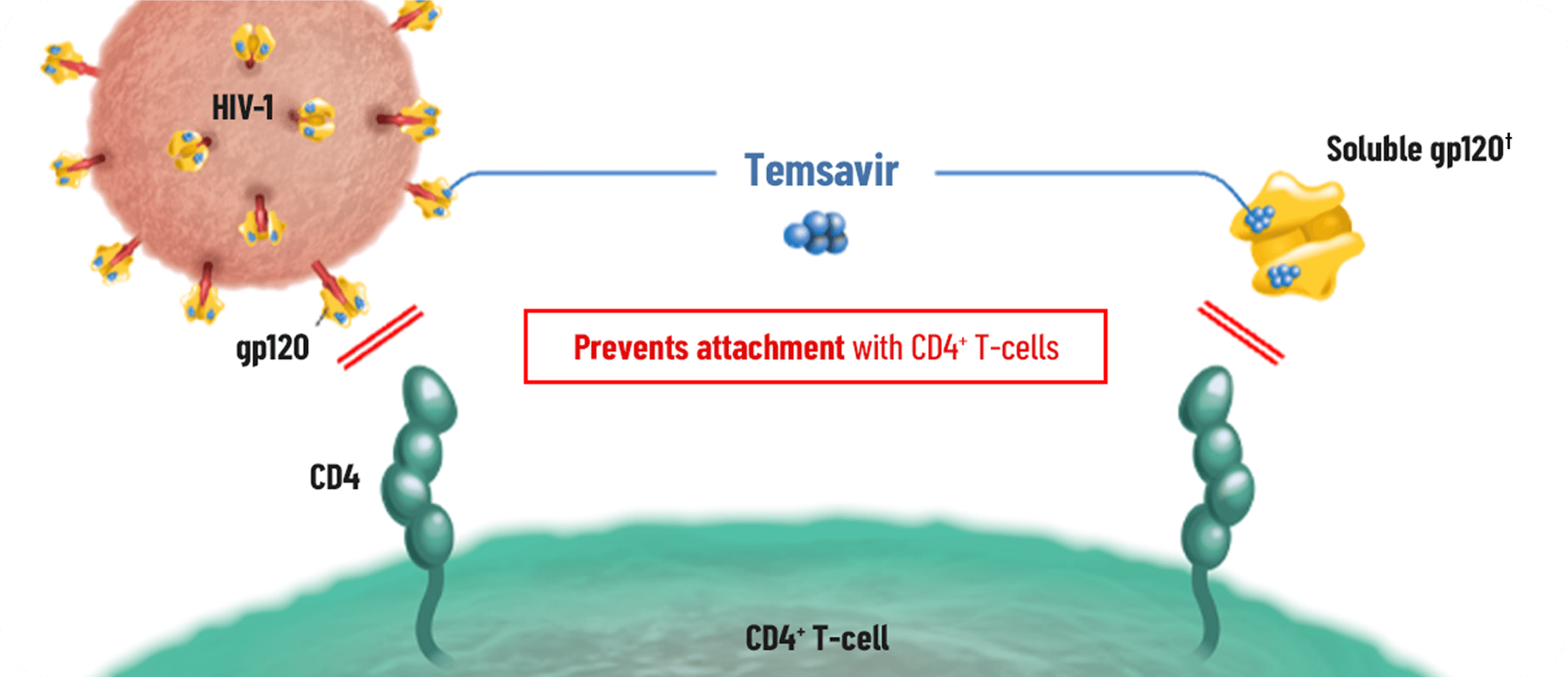
RUKOBIA prevents the first step of viral entry before attachment to the CD4+ T-cells*
PREVENTS
RUKOBIA prevents HIV-1 attachment to CD4+ T-cells by binding to the gp120 subunit.1,3
PROTECTS
RUKOBIA protects uninfected CD4+ T-cells from HIV-1.1
PRESERVES
RUKOBIA preserves CD4+ T-cell function by preventing viral replication.1
*RUKOBIA is the only pre-attachment inhibitor for the treatment of multidrug-resistant HIV-1.1,2
†Clinical significance of binding to soluble gp120 is unknown.
ARV=antiretroviral; gp120=glycoprotein 120; HIV-1=human immunodeficiency virus type-1; MOA=mechanism of action.
Temsavir, the active moiety of RUKOBIA, attaches directly to gp120 on the surface of HIV-1 virions, near the CD4+ attachment site. The attachment of temsavir locks gp120 into a closed formation that prevents the initial interaction between the virus and host immune cells.1,3
This action prevents the first step of viral entry.4
References:
- Ackerman P, Thompson M, Molina JM, et al. Long-term efficacy and safety of fostemsavir among subgroups of heavily treatment-experienced adults with HIV-1. AIDS 2021;35(7):1061-1072.
- Lataillade M, Lalezari JP, Kozal M, et al. Safety and efficacy of the HIV-1 attachment inhibitor prodrug fostemsavir in heavily treatment-experienced individuals: week 96 results of the phase 3 BRIGHTE study. Lancet HIV. 2020;7(11):e740-e751. doi:10.1016/S2352-3018(20)30240-X
- Thompson M, Lalezari JP, Kaplan R, et al. Safety and efficacy of the HIV-1 attachment inhibitor prodrug fostemsavir in antiretroviral-experienced subjects: week 48 analysis of AI438011, a Phase IIb, randomized controlled trial. Antivir Ther. 2017;22(3):215-223.
- Cahn P, Fink V, Patterson P. Fostemsavir: a new CD4 attachment inhibitor. Curr Opin HIV AIDS. 2018;13(4):341-345.
PMUS-FSTWCNT260007