


Which of your patients living with MDR HIV-1 could benefit from RUKOBIA?
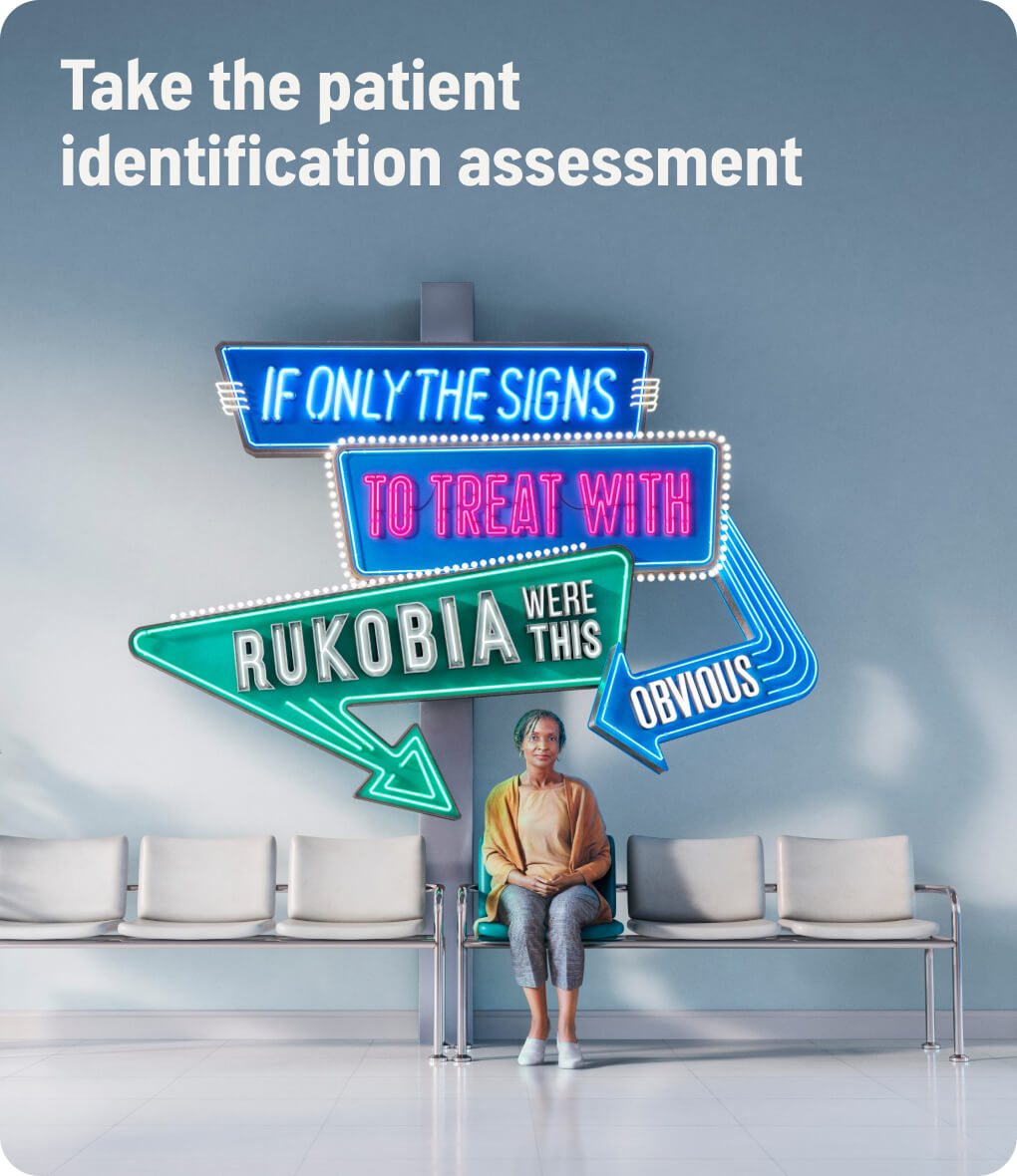

When MDR HIV-1 closes a door, RUKOBIA could open one
Take a few minutes to find out if anyone in your practice could benefit from this therapy, which was granted Breakthrough Therapy designation.*
Complete all questions to receive your personalized results at the end.
You may not currently have people living with MDR HIV-1 in your care, but you may in the future.
People living with MDR HIV-1 may struggle to achieve or maintain viral suppression due to drug resistance, safety or tolerability issues, or drug interactions that lead to ART failure (or treatment failure). They may also face challenges with poor CD4+ T-cell recovery.
These individuals may have limited treatment options and could benefit from drugs with a novel mechanism of action, like RUKOBIA.2,3
You could have people living with MDR HIV-1 in your care.
They may experience treatment failure due to resistance, intolerance, or safety concerns.
6/7
Is your patient living with MDR HIV-1 failing their current ART due to existing or new comorbidities that raise safety concerns?
Based on your answers, there may not currently be any individuals with MDR HIV-1 in your care that align with who RUKOBIA is indicated for.
However, if you were to treat people living with MDR HIV-1 in the future, it is worth considering that individuals with limited treatment options may experience multiple risks and challenges. These patients may be failing their ART (or ARV regimen) due to resistance, intolerance, or safety concerns.
Find out when it could be time to consider RUKOBIA, in combination with other ARVs
You have identified patients living with MDR HIV-1 in your practice who might benefit from RUKOBIA due to issues related to:
Development of drug resistance is limiting the efficacy of their current regimen
RUKOBIA, in combination with other ARVs, may be an option for people with MDR HIV-1 who cannot achieve viral suppression.1
SEE RUKOBIA DATA FOR VIRAL LOAD REDUCTION, INCLUDING VIROLOGIC SUPPRESSION, AND CD4+ T-CELL RECOVERY.1
Their current ARV regimen is unsuccessful due to intolerance
See the tolerability profile of RUKOBIA + OBT over ~5 years.1
THE SAFETY PROFILE FOR RUKOBIA IS SUPPORTED BY ~5 YEARS* OF CLINICAL DATA IN THE BRIGHTE STUDY1
*Based on BRIGHTE 240-week data.
Your patient's regimen may be unsuccessful due to new or existing comorbidities with medication changes requiring consideration for drug interactions
Drug interactions, an important consideration for all patients on ARVs, may demand special attention in individuals with MDR HIV-1 who have been on complex regimens for many years or may have comorbidities requiring treatment.1
RUKOBIA HAS A WELL-ESTABLISHED DRUG INTERACTIONS PROFILE
Your patient’s ARV regimen may be unsuccessful due to drug interactions, and they may need another option
Drug interactions, an important consideration for all patients on ARVs, may demand special attention in patients with MDR HIV-1.
RUKOBIA HAS A WELL-CHARACTERIZED DRUG INTERACTIONS PROFILE
*FDA's Breakthrough Therapy designation is intended to facilitate and expedite the development and review of new drugs to address unmet medical need in the treatment of a serious or life-threatening condition.
†CCR5 antagonists, post-attachment inhibitors, or fusion inhibitors.
ART=antiretroviral therapy; ARV=antiretroviral; DDI=drug-drug interaction; HIV-1=human immunodeficiency virus type-1; MDR=multidrug-resistant; OBT=optimized background therapy.
References:
- Aberg JA, Shepherd B, Wang M, et al. Week 240 efficacy and safety of fostemsavir plus optimized background therapy in heavily treatment-experienced adults with HIV-1. Infect Dis Ther. 2023;12(9):2321-2335. doi:10.1007/s40121-023-00870-6
- Ackerman P, Thompson M, Molina JM, et al. Long-term efficacy and safety of fostemsavir among subgroups of heavily treatment-experienced adults with HIV-1. AIDS. 2021;35(7):1061-1072.
- Lataillade M, Lalezari JP, Kozal M, et al. Safety and efficacy of the HIV-1 attachment inhibitor prodrug fostemsavir in heavily treatment-experienced individuals: week 96 results of the phase 3 BRIGHTE study. Lancet HIV. 2020;7(11):e740-e751. doi:10.1016/S2352-3018(20)30240-X
The many faces of people living with MDR HIV-11-4
People living with MDR HIV-1 are a diverse group. Each has a unique journey but shares similar needs for:
- Durable virologic suppression
- CD4+ T-cell recovery
Images are not real patients.


42 years old
Diagnosed 20 years ago
“I'm worried about my long-term health because my current HIV-1 treatment is not working for me, and I'm nervous about opportunistic infections.”
People living with MDR HIV-1 may be concerned about ongoing viremia and the associated health risks.3


59 years old
Diagnosed 27 years ago
“As I get older, I have developed additional medical conditions. I need to consider how my medications may affect each other and impact my failing ARV treatment.”
People living with MDR HIV-1 who are failing ART due to drug interactions may need another option.4


49 years old
Diagnosed 15 years ago
“My HIV-1 treatment is not working for me, and I am experiencing certain side effects. Is there another option out there for me?”
People living with MDR HIV-1 may be failing their ARV regimen due to difficulty tolerating the side effects.4


65 years old
Diagnosed 23 years ago
“I’m feeling anxious because I’m running out of options and wondering if there’s an ARV regimen out there that could help me.”
People living with MDR HIV-1 may be long-term survivors who are living with the prospect of running out of treatment options.2
Some people living with MDR HIV-1 may no longer be successful on their current regimen due to resistance, intolerance, or safety concerns. Hear the unique experiences and treatment journeys of these people living with HIV-1 (PLWH).
Real-life stories of people living with MDR HIV-1
Meet James
Listen as James, a patient living with MDR HIV-1, discusses his experience beginning with accepting his diagnosis to now adhering to his treatment.
James, living with HIV-1. Individual results may vary. Compensated by ViiV Healthcare.
Dennis, living with HIV-1 and taking RUKOBIA. Individual results may vary. Compensated by ViiV Healthcare.
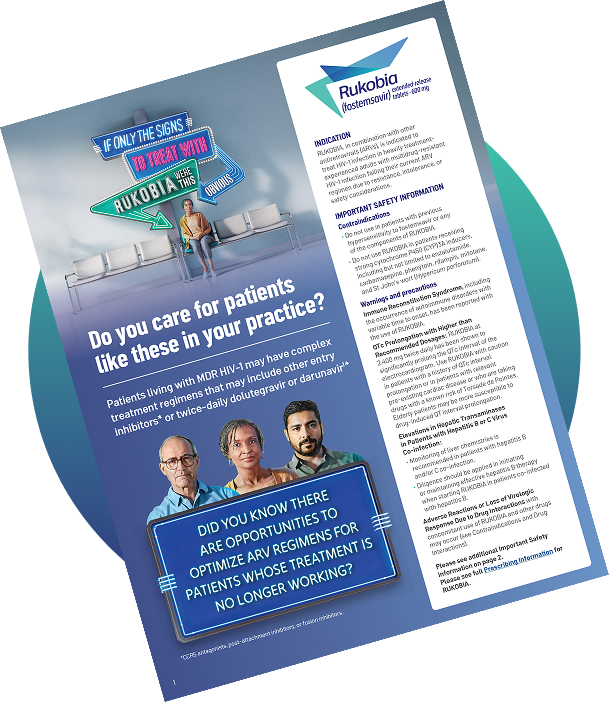
Some of your patients may benefit from a change
Explore opportunities to optimize ARV regimens with the patient identifier tool
References:
- Aberg JA, Shepherd B, Wang M, et al. Week 240 efficacy and safety of fostemsavir plus optimized background therapy in heavily treatment-experienced adults with HIV-1. Infect Dis Ther. 2023;12(9):2321-2335. doi:10.1007/s40121-023-00870-6
- Ackerman P, Thompson M, Molina JM, et al. Long-term efficacy and safety of fostemsavir among subgroups of heavily treatment-experienced adults with HIV-1. AIDS. 2021;35(7):1061-1072.
- Pelchen-Matthews A, Borges AH, Reekie J, et al. Prevalence and outcomes for heavily treatment-experienced individuals living with human immunodeficiency virus in a European cohort. J Acquir Immune Defic Syndr. 2021;87(2):806-817.
- Lataillade M, Lalezari JP, Kozal M, et al. Safety and efficacy of the HIV-1 attachment inhibitor prodrug fostemsavir in heavily treatment-experienced individuals: week 96 results of the phase 3 BRIGHTE study. Lancet HIV. 2020;7(11):740-751.
PMUS-FSTWCNT260005